At the Institute for Protein Design, scientific breakthroughs rarely belong to a single person, a single experiment, or even a single discipline. They emerge from something our director, David Baker, often describes as the “communal brain”: a culture where computational scientists, experimental researchers, software engineers, and protein designers work side by side, sharing ideas, challenging assumptions, and turning observations into collective knowledge.
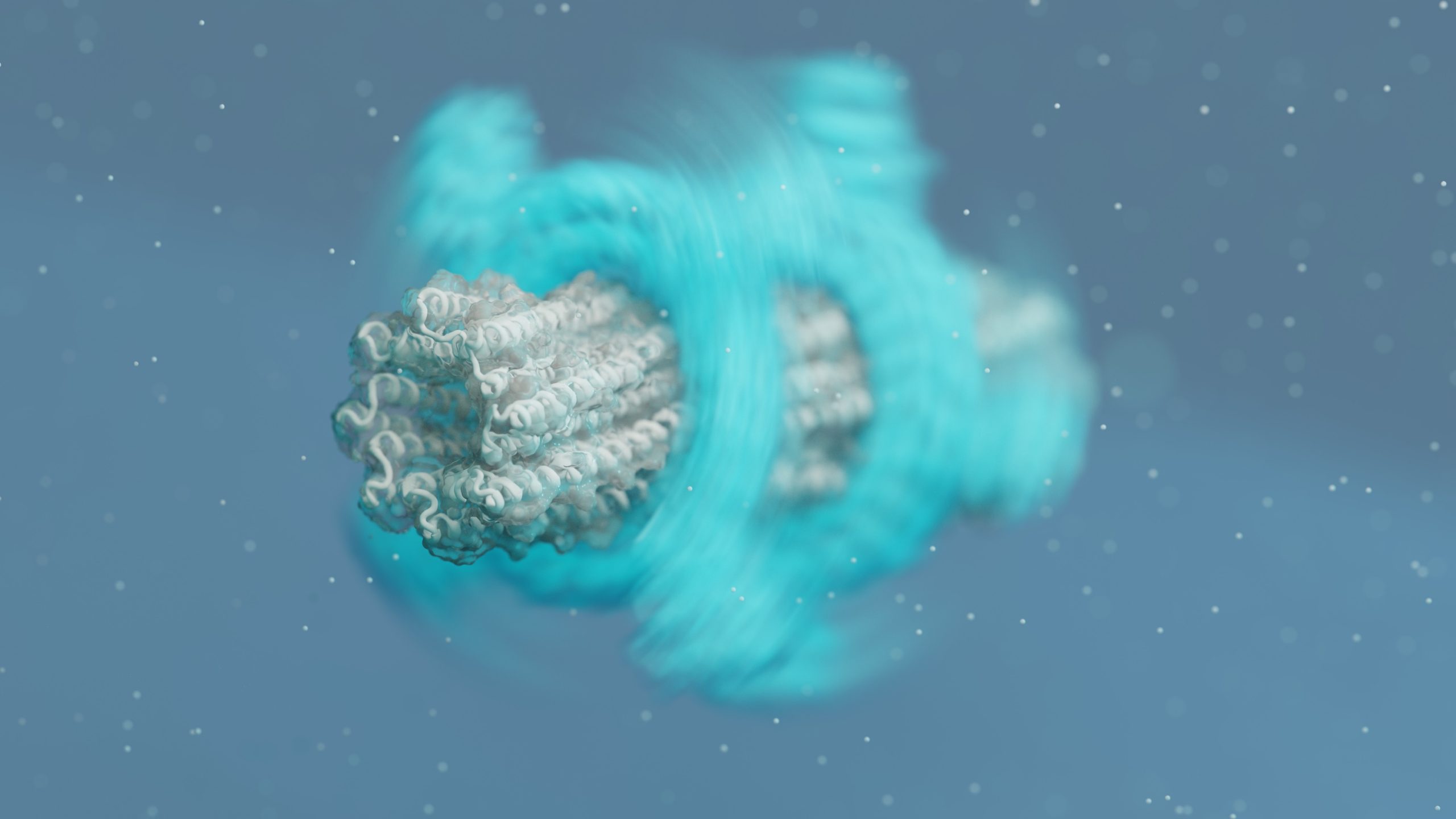
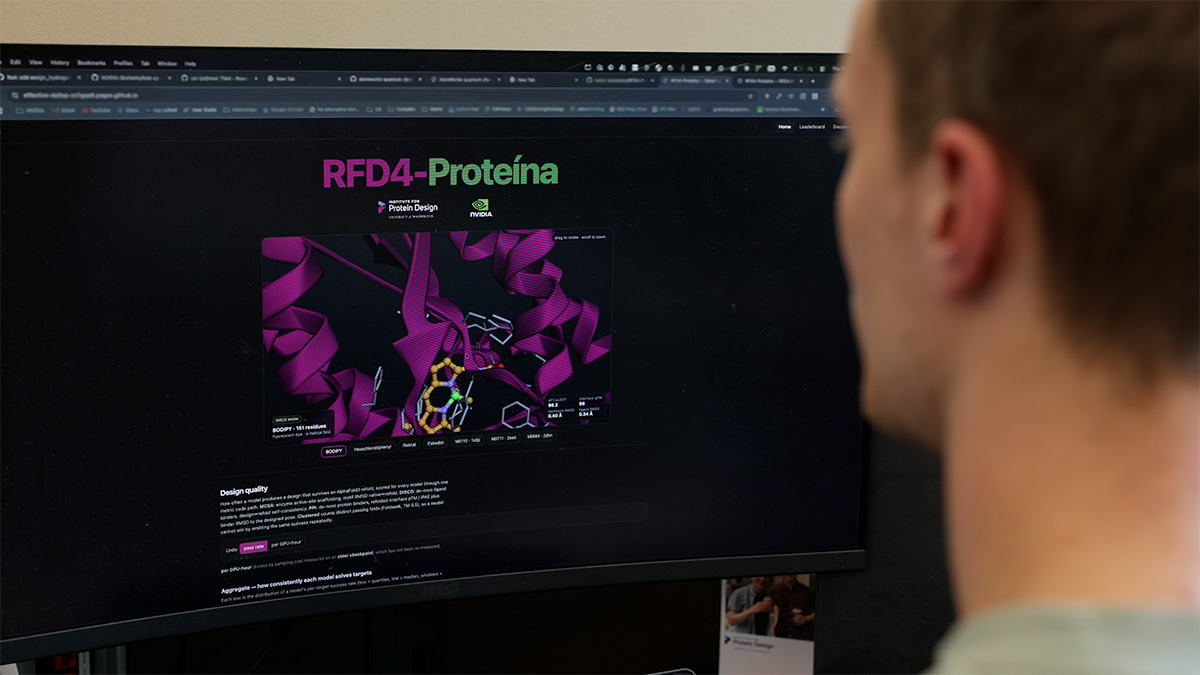
That ethos is woven throughout the story of RFD4-Proteina, our latest generative model for protein design. This new model, co-developed with NVIDIA, is a considerable improvement over prior models, delivering 5- to 10-times greater throughput of high-quality designs than previous methods.
RFD4-Proteina, named for the two lineages of computations models it marries (RosettaFold Diffusion and Proteina-Complexa), is the result of new algorithms, growing datasets, and significant computational innovation. But its development also reflects something less visible and equally important: a fabric of connection at the IPD that enables conversations between our ‘dry lab’ work (designing computational models & in silico proteins) and the ‘wet lab’ validation of designed proteins.
Where innovation meets iteration
Biology is extraordinarily complex, posing a unique challenge for computational modeling. And in addition, our understanding of biological systems remains incomplete, and protein designers have their work cut out for them. Even the most sophisticated computational models, like the lineages RFD4-Proteina was birthed from, can only capture some elements of understanding about how a protein will function as anticipated in situ.
Because of this, protein design relies on iterative cycles of designing, testing, and revising. The unique composition of the IPD, armed with both dry- and wet-lab capabilities, helps accelerate that process. The crowded rows of the Baker Lab at the IPD’s University of Washington campus house both people developing these computational models and their peers using the models to design new proteins. Nothing is developed in isolation; ideas, frustrations, and successes are all shared assets at the IPD.
The result is a continuous feedback loop: build a model, use it, identify limitations, improve it, test again.
The development process can be compared to the famous Skunk Works model pioneered in aerospace engineering. The principle is simple: put the people designing something as close as possible to the people building and testing it. When engineers can walk the floor, see challenges firsthand, and talk directly with the people encountering them, improvements happen faster. Problems that might take months to communicate through formal channels can be identified and addressed in a single conversation.
At the IPD, that same dynamic plays out across machine learning and experimental biology.
A researcher may discover that a model-generated design contains features that look acceptable by computational metrics but raise concerns based on years of experience working with proteins. Another might identify a practical laboratory constraint that should be considered during design. Those observations quickly become discussions with model developers, who can incorporate that knowledge into future versions of the system.
Over time, individual insights become shared understanding.
The result is a continuous feedback loop: build a model, use it, identify limitations, improve it, and test again. The fuel for that engine is Baker’s communal brain, and RFD4-Proteina is only the latest success story to emerge from this ethos.
“Whenever we thought the model was feature-complete, a designer would mention some boundary-pushing new use-case that sent us back to the drawing board. This consistently improved the model’s flexibility and performance, making it immediately impactful in the lab.” – Rafi Brent, PhD candidate in the Baker Lab
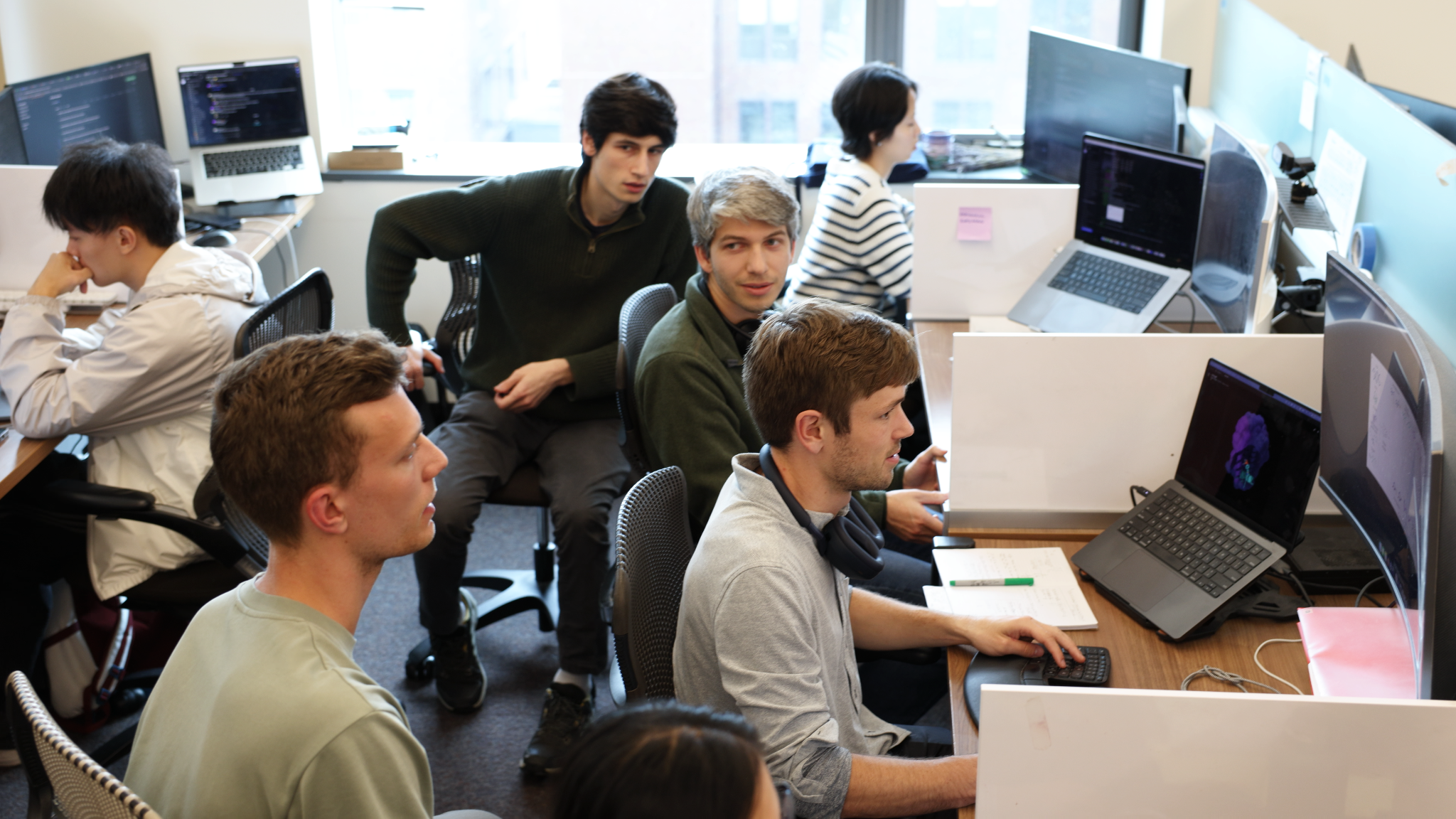
The RFD4-Proteina team working in the IPD’s dry lab.
How the communal brain shaped RFD4-Proteina
One lesson repeatedly reinforced throughout protein design is that “looks good on the computer” is not always enough. Experienced researchers often recognize opportunities or potential problems that current computational methods struggle to capture. A design might achieve strong scores according to existing metrics while still containing features that appear unlikely to perform well in a biological setting.
The RFD4-Proteina team experienced this first-hand during the model’s sprint-to-the-finish development.
After one methodological change boosted the standard in silico metrics, designers noticed some overly long helical substructures. Upon further investigation, the team realized that such examples had actually existed in the training data all along, but that previous models had been unable to make them. By filtering the training data according to designer preferences, they removed the undesirable tendencies while retaining the core performance improvements.
Each successful experiment strengthens confidence in a design approach. Each failure provides information that can help refine future models. For RFD4-Proteina, this ongoing interaction between computation, human expertise, and experimental validation helped shape both the model itself and the way its outputs are evaluated.
From hallway conversations to new capabilities
Some of the most important advances do not begin in formal meetings or project plans.
RFD4-Proteina’s inception was a late-night conversation in the Baker lab. The team members were casually discussing existing computational models, comparing strengths and weaknesses of the RFdiffusion and Proteina-Complexa lineages, when they had the idea to try to marry the two into a single generative model. Several methods researchers were excited by the possibility and decided to give it a go, leveraging their colleagues, who were working to solve a myriad of protein design challenges, for feedback along the way.
The model, by all metrics, is a huge success, and will transform what the field can achieve in the coming years. But its existence is a reaffirmation of what Baker has known for years—our work is better when it’s rooted in deep collaboration, when it asks the biggest and most challenging questions, when failure is a data point and our successes are shared.
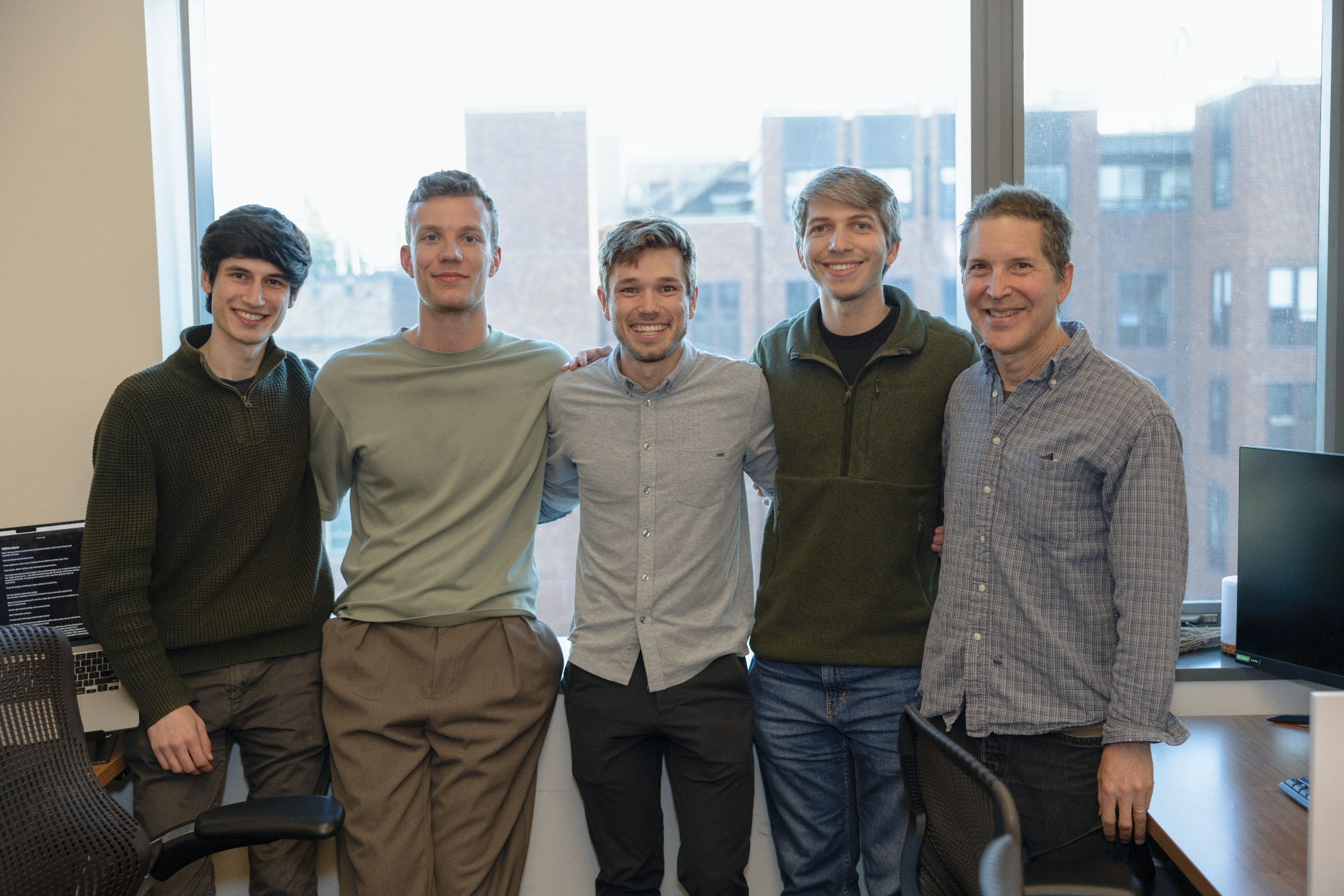
The RFD4-Proteina team with Professor David Baker.